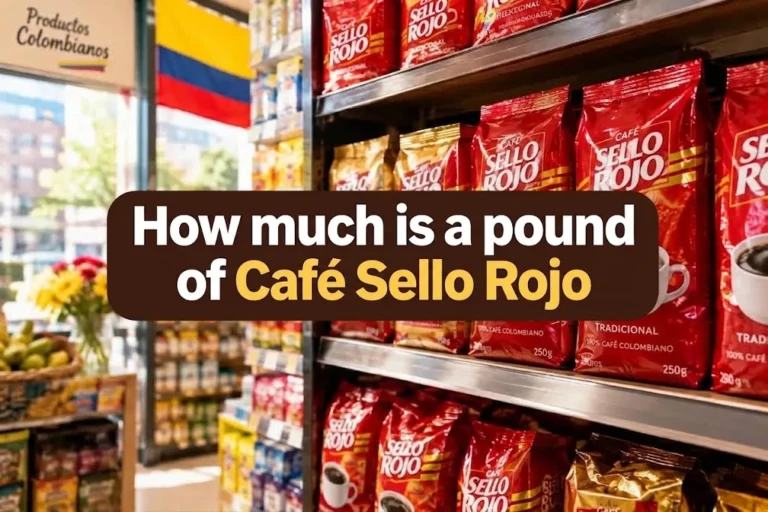
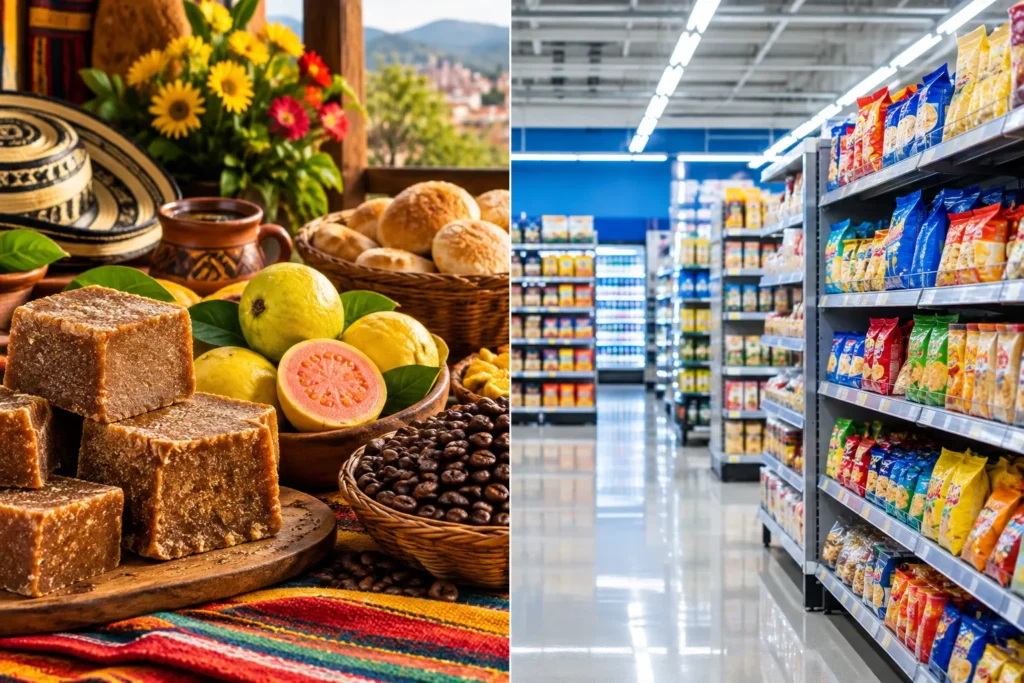
A bag of “Bocadillo” bought in Bogotá does not taste the same as the version found in a conventional New York supermarket. The color changes, the texture changes, and even the aroma upon opening the package is different. There is a key ingredient—present in almost all traditional Colombian snacks and beverages—that, when replaced in US production, completely alters the flavor experience, and few consumers know exactly what it is or why it disappears in local versions.
Quick Answer
The difference between Colombian and US products centers on three factors: the sweeteners used, the level of industrial processing, and each country’s food regulations. Colombian products are typically made with natural sugars such as panela or cane sugar, fresh ingredients, and traditional flavor profiles passed down through family recipes. US products, on the other hand, prioritize high-fructose corn syrup, higher levels of chemical preservatives, and formulas designed for large-scale mass production, resulting in noticeably different textures and flavors.

What is the Difference Between Colombian and US Products? Comparative Analysis
The intent behind this question almost always stems from a sensory experience: someone notices that their favorite brand “tastes different” when purchased in the United States. The direct answer is that each country’s food regulations, along with the cultural preferences of its consumers, shape the final product from formula to packaging. Colombia allows a more flexible use of natural sugars and traditional fats, while the US requires preservation standards designed for continental distribution chains.
Before diving into technical details, it is worth understanding the broader commercial landscape. The United States remains the primary destination market for Colombian exports in 2026, with a basket dominated by non-mining and non-energy goods compared to US industrial products, which are far more diversified and technologically sophisticated. This economic asymmetry partly explains why Colombian products arriving in US territory often adapt—sometimes losing authenticity—to comply with local regulations.
Main Differences in Flavor, Ingredients, and Manufacturing Standards

Sweeteners: Natural vs. Synthetic
The most noticeable point of comparison is sweeteners. Panela, obtained directly from unrefined sugar cane, brings caramelized notes and a denser texture to products like bocadillo, obleas, and traditional drinks. In the United States, mass production favors high-fructose corn syrup, which is more economical and shelf-stable, but alters sweetness and leaves a different aftertaste for palates accustomed to Colombian flavor.
Flours, Dairy, and Traditional Baked Goods
In bakery items and traditional doughs, Colombia frequently uses less refined wheat flours and fresh regional dairy products, such as the queso campesino used in almojábanas and pandebonos. Versions manufactured in the US under license typically replace these dairy products with longer-lasting pasteurized alternatives, changing the consistency and melting point of the cheese when baked.
Colorings, Preservatives, and Nutritional Profile
Permitted artificial colorings and preservatives vary considerably between both countries. Colombia tends to allow fewer synthetic additives in certain traditional products, whereas US regulations mandate specific preservatives to extend shelf life. This directly impacts the nutritional profile: authentic Colombian products generally contain less added sodium and less ultra-processing, though they also have a shorter expiration date.
The following table summarizes the most queried differences among the community:
| Key Factor | Colombian Product | US Product |
| Main Sweetener | Panela, cane sugar | High-fructose corn syrup |
| Processing Level | Lower ultra-processing | Higher industrialization |
| Preservatives | Reduced use | Extended use for shelf life |
| Shelf Life | Shorter | Longer |
| Flavor Profile | Traditional, artisanal | Standardized, mass-produced |
This table does not aim to declare a winner, but rather to illustrate why the growing sophistication of Colombian products—with more exportable presentations and improved packaging—still faces a technological gap compared to US industrial infrastructure, which is highly automated and standardized.
Those who wish to preserve the original flavor without compromise can explore the selection available at the tienda de productos latinos, cuidado personal y hogar at Colombia Pharmacy, where many items maintain their traditional formula.
The Nostalgia Product Market in the US and Labeling Authenticity
The phenomenon of “nostalgic consumption” has driven a parallel market in cities like New York: original Colombian products imported directly versus adapted versions manufactured on US soil under license to comply with the FDA. Both products may carry the same name and logo, but they rarely share an identical formula, because the regulatory agency demands specific adjustments in additives, serving sizes, and nutritional statements.
This distinction explains why many Colombian consumers in Queens specifically look for the “Made in Colombia” version rather than the locally manufactured one. Imported labeling usually preserves the original ingredient list, whereas the local version discloses mandatory substitutions required by US regulations. Furthermore, with the new 125% tariff applied in 2026 to certain Colombian products, some nostalgia categories have become more expensive to import, accelerating local licensed production as a budget-friendly alternative, albeit with modified flavor.
This scenario also connects with the daily health and wellness of the community. As a community pharmacy, Colombia Pharmacy understands that consuming products with fewer preservatives and natural sugars can be part of a more mindful diet, while complementing the servicios de farmacia y vacunación available in Queens for families seeking comprehensive healthcare.
Conclusion
The difference between Colombian and US products is not just a matter of branding or price: it is a question of formula, regulation, and gastronomic memory. Choosing authentic Colombian products ensures preserving original flavors, artisanal methods, and culinary traditions that define the identity of every home, without the alterations imposed by US mass production. At a time when tariffs and the 2026 commercial shifts are altering product availability, staying informed before buying is more important than ever.
Medical Disclaimer: This article is for informational purposes only and does not substitute for consultation with a qualified healthcare provider. If you have questions about food allergies, specific ingredients, or dietary medical conditions, always consult your trusted pharmacist or doctor.
Key Takeaways
- Colombian products predominantly use panela and cane sugar, whereas many US products rely on high-fructose corn syrup.
- Colombia maintains a strong agricultural export basket in coffee, flowers, and fresh fruits, a key differentiator against US industrial diversification.
- The new 125% US tariff applied in 2026 on several Colombian products is reshaping price competitiveness in the market.
- FDA regulations require modifying packaging and, in some cases, the formula of imported or locally licensed products.
- Authentic Colombian products typically have a shorter shelf life due to their lower load of artificial preservatives.
- The Colombia-US Free Trade Agreement (FTA) remains the regulatory framework defining tariffs and trade conditions between both markets.
Frequently Asked Questions
Why does Colombian coffee produced for domestic consumption taste different from coffee packaged for US supermarkets?
Coffee intended for the Colombian domestic market is typically roasted in fresher batches with specific regional profiles, whereas large-scale export coffee is homogenized to satisfy mass palates and meet standardized roasting timelines, reducing original floral or fruity notes.
What FDA regulations require changing the packaging or nutrition facts label of products imported from Colombia?
The FDA requires all imported food products to include a nutrition facts panel in English using a specific format, declare common allergens, and replace additives not approved in US territory, which sometimes involves slightly reformulating the original product.
Do Colombian products have a shorter shelf life than their US equivalents due to having fewer preservatives?
Yes, in general, Colombian products made with traditional methods and fewer artificial preservatives tend to expire faster, requiring more frequent inventory turnover in specialized stores and bodegas handling imported goods.