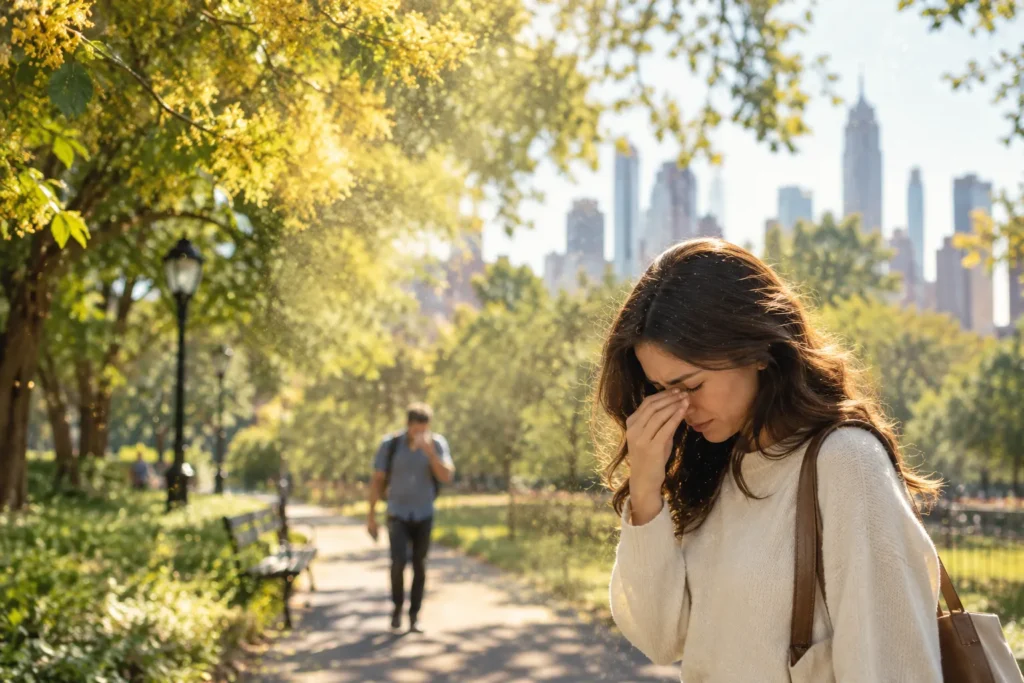
Sneezing begins as soon as you step off the train in Queens, your eyes burn before you reach the corner, and your nose won’t stop running even though the sky is clear. Thousands of New Yorkers who never had respiratory problems before now face the same discomfort every spring and fall. What few know is that a silent trigger, hidden among the trees and weeds of the city’s parks, is behind this new wave of nyc allergies that spares no age or medical history.
Quick Answer
NYC allergies arise from a unique combination: high concentrations of tree pollen such as oak and birch in spring, weeds like ragweed in fall, humidity that favors mold, and a constant layer of urban pollution that irritates respiratory airways. Added to this is dust accumulated in buildings with central heating during winter. The key to controlling symptoms lies in identifying the dominant allergen according to the season, monitoring daily pollen counts, adjusting the home environment, and starting antihistamine treatments before the seasonal peak arrives.
Allergies in NYC: 5 Main Triggers and How to Protect Your Seasonal Health
New Yorkers experience particularly severe allergies because the city combines several environmental factors in a small, densely populated area. Urban parks concentrate a wide variety of trees and weeds that release pollen directly over busy streets, while tall buildings trap pollution and humidity. This mix of urban nature and population density turns New York into an environment conducive to intense, prolonged allergic reactions.
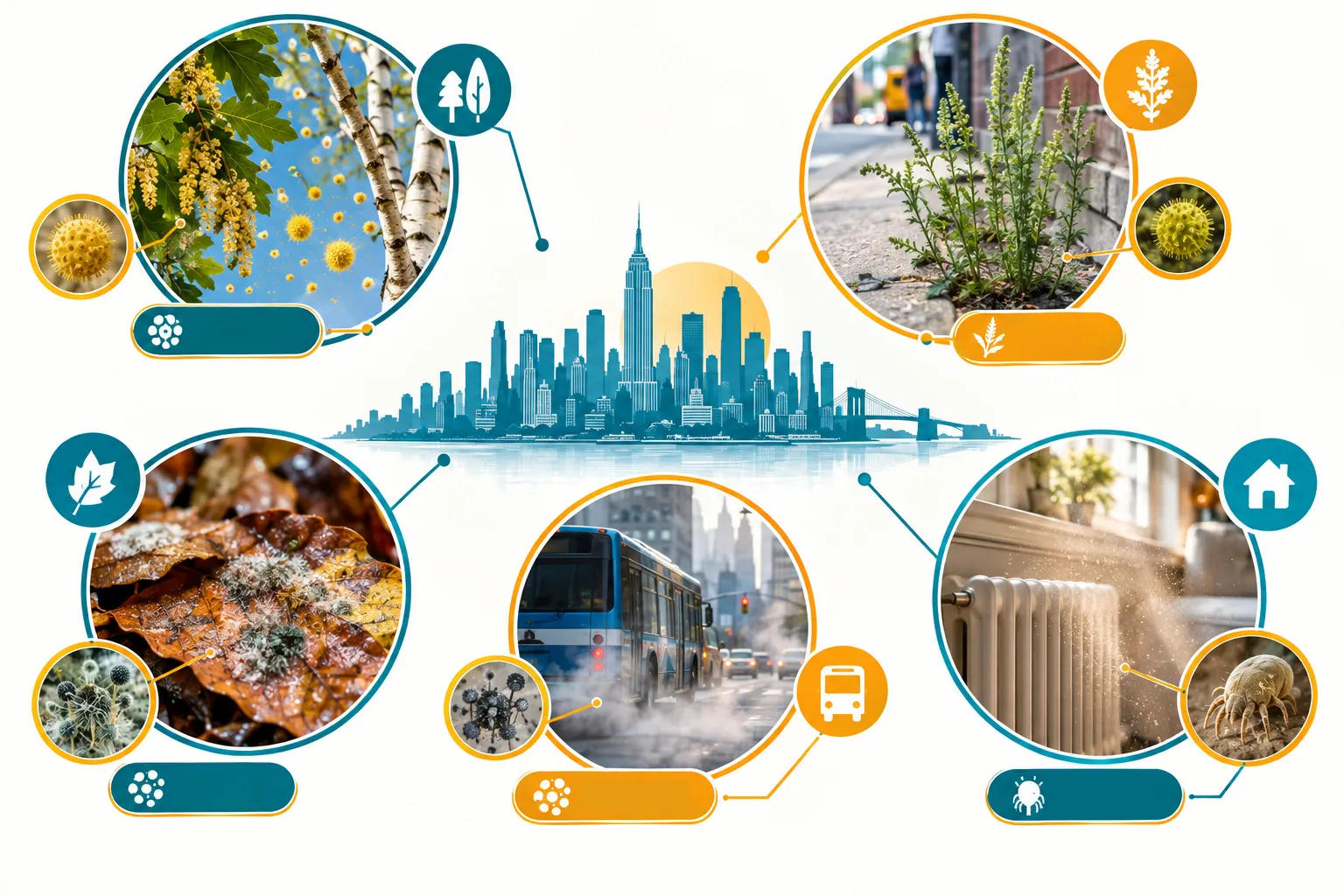
Below are the five main triggers affecting city residents during different times of the year. Each has a period of peak activity and requires specific prevention strategies. Knowing them allows you to anticipate symptoms and take action before they worsen.
1. Spring Tree Pollen in City Parks and Avenues
Between March and May, urban trees release massive amounts of pollen from oak, London plane, and birch—species very common along avenues and in parks like Central Park or Prospect Park. According to studies in the metropolitan region, tree pollen reaches its peak in May, generating congestion, eye itchiness, and fatigue in sensitive individuals. This period marks the official start of the allergy season in the city, which specialists say can begin even as early as late February during mild winters.
2. Weeds and Ragweed Pollen During Late Summer and Fall
Ragweed is the most aggressive weed of the autumn season and can grow even in sidewalk cracks and vacant lots. Winds across the tri-state area transport its spores hundreds of miles, leaving urban residents exposed even if they don’t see the plant nearby. Recent data shows ragweed levels between 120 and 180 PPM over several consecutive days in October, confirming that this weed is now the primary driver of fall symptoms, surpassing even tree and grass pollen.
3. Mold Spores Accumulated in Humid Environments and Fallen Leaves
New York’s constant humidity favors the proliferation of mold spores, both outdoors on fallen leaves in autumn and in damp indoor environments like apartments and subway stations. This allergen often goes unnoticed because it doesn’t depend on a specific season, but rather on environmental conditions that can occur year-round. Prolonged exposure to indoor mold can exacerbate respiratory symptoms, especially in individuals with pre-existing asthma.
4. Urban Pollution and Diesel Exhaust Particles as Symptom Amplifiers
Smog and diesel exhaust particles from heavy traffic irritate nasal mucosa, causing the body to react with greater intensity even to moderate pollen levels. This combination of pollution and natural allergens is one reason why symptoms in dense cities like New York tend to be more severe than in rural areas with similar pollen levels. Specialists point out that this cross-sensitization explains why many people describe their urban allergies as more aggressive than those they recall from other places.
5. Dust Mites and Indoor Allergens in Buildings with Central Heating
During the winter, central heating systems recirculate accumulated dust and dust mites that had settled for months, triggering sneezing and congestion even without outdoor pollen present. This phenomenon is especially common in older buildings across Queens, Brooklyn, and Manhattan, where ventilation ducts are rarely cleaned frequently. For people with asthma, this stage represents an additional risk that city health authorities recommend monitoring closely.
Preventive Strategies to Survive NYC Allergy Season
Controlling nyc allergies requires a combined approach of daily habits and early preparation. The following strategies, backed by public health recommendations and regional allergy specialists, help significantly reduce exposure to the city’s most common allergens.
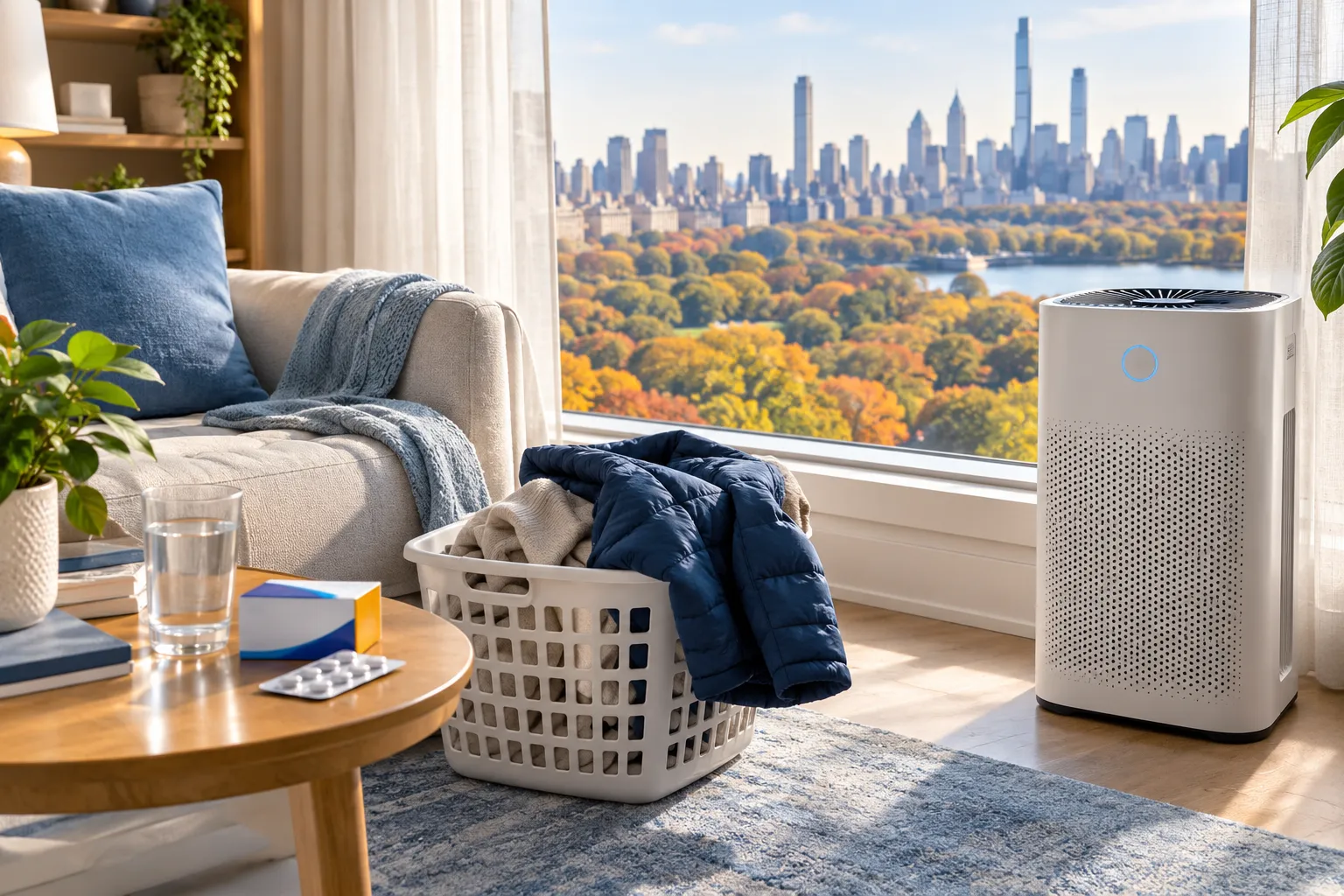
Home Measures:
- Use air purifiers with HEPA filters in bedrooms and main living areas, especially during peak spring and fall pollen periods.
- Keep windows closed on high pollen count days, using air conditioning or filtered ventilation instead.
- Wash clothes and shower after strolling through Central Park or other green spaces, as pollen adheres to skin and fabric fibers.
- Regularly clean heating ducts and use dehumidifiers in mold-prone areas, such as bathrooms and basements.
Optimal Time to Start Treatments:
| Season | Primary Allergen | Recommended Treatment Start |
| Spring | Tree pollen (oak, birch) | Late February |
| Summer | Grasses | May |
| Fall | Ragweed | August |
Regional specialists recommend starting antihistamines or steroid nasal sprays several weeks before the expected peak, as preventive treatment proves far more effective than waiting until symptoms appear. For those suffering from moderate to severe allergies, immunotherapy offers a long-term alternative that reduces sensitivity to these allergens over time.
“Anticipating the pollen season, rather than reacting once symptoms are present, is the difference between a manageable spring and weeks of constant discomfort.”
A small practical tip shared by many Jackson Heights residents: checking the daily pollen forecast before planning outdoor activities—just like checking the weather forecast—has become as natural a habit as checking the train schedule. For those seeking personalized guidance on which antihistamine or preventive treatment is best for their history, community pharmacy teams can offer direct and accessible advice. Learn more about the pharmacy and vaccination services available in the community or visit the personal care products and vitamins section to complement your seasonal prevention routine.
Controlling nyc allergies is not just a matter of daily comfort: it is a key measure to protect energy, sleep, and long-term respiratory health in a city where pollen, pollution, and mold constantly coexist. Recognizing the five main triggers and acting in advance, before the seasonal peak arrives, makes a real difference in the quality of life for thousands of residents. If symptoms persist or intensify year after year, consider scheduling an allergy test or immunology consultation with a local medical specialist to accurately identify your triggers. The team at Colombia Pharmacy is available to guide you on antihistamine treatments, nasal sprays, and appropriate wellness products for your case; visit our location in Jackson Heights or consult directly with our expert pharmacists to receive attentive, informed, and culturally understanding care.
Medical Notice: This article is for informational purposes and does not replace professional medical advice. Always consult with a qualified doctor or pharmacist before starting, changing, or discontinuing any allergy treatment.
Key Takeaways
- Tree pollen dominates between March and May, while ragweed is the primary allergen between August and October, with September being the most intense month.
- Outdoor and indoor mold accumulates with New York’s humidity, affecting both apartments and subway stations.
- Urban pollution and diesel particles amplify sensitivity to pollen, even on days with moderate counts.
- Central heating systems recirculate dust mites and dust, causing allergic symptoms in winter as well.
- Starting preventive treatments in August, before the ragweed peak, significantly reduces the severity of fall symptoms.
- Keeping windows closed and using HEPA purifiers on high pollen days is one of the most effective measures recommended by city health authorities.
Frequently Asked Questions
Why do many people develop allergies for the first time after moving to New York?
The immune system can become sensitized to new environmental allergens that did not exist in a person’s place of origin. Residents who move to New York from regions with different vegetation—for example, tropical areas with little presence of ragweed or birch—can develop allergic reactions after one or several seasons of continuous exposure. This phenomenon, known as late onset sensitization, is common in cities with a high diversity of trees and weeds like New York.
What is the difference between a common cold and allergic rhinitis caused by city pollen?
A cold usually includes a mild fever, sore throat, and symptoms that improve in seven to ten days, whereas allergic rhinitis causes itchy eyes and nose, repetitive sneezing, and symptoms that persist as long as the allergen is present in the environment, potentially lasting weeks or months. Additionally, allergic rhinitis is not contagious and typically worsens on high pollen count days, unlike a cold, which follows a course independent of the weather.
How effective are allergy shots or sublingual immunotherapy for typical tri-state region allergens?
Immunotherapy, both in the form of injections and sublingual tablets, has been shown to significantly reduce sensitivity to common tri-state region allergens, such as birch pollen, grasses, and ragweed, after sustained treatment over several years. Its effectiveness is highest when initiated under the supervision of an allergist and maintained consistently, achieving long-lasting symptom reduction in many patients even after completing treatment.