
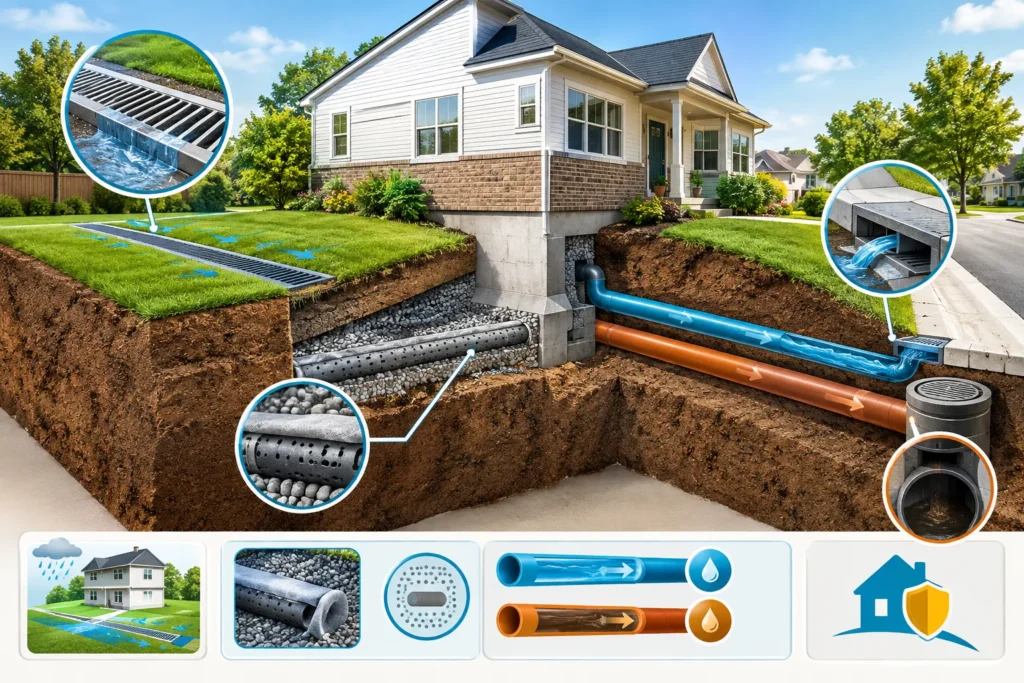
A miscalculated slope in the yard or a leaking underground pipe can go unnoticed for months, until a heavy storm turns that silent flaw into a flood that compromises foundations, walls, and the health of everyone living on the property. Understanding what the 3 types of drainage systems are is the first step toward detecting that error before the entire system collapses. This article provides technical criteria to help you identify and select the right drainage system for every situation.
Quick Answer
The three main types of drainage systems are: surface drainage systems, designed with gutters and ditches to quickly evacuate water accumulated on lawns and pavements; subsurface or deep drainage systems, such as French drains, which control groundwater levels and protect foundations from hydrostatic pressure; and sanitary and storm drainage systems, structured piping networks that convey wastewater and rainwater toward treatment facilities or public sewer systems. Each type serves a distinct function and, in most cases, must operate separately to function properly.
What Are the 3 Types of Drainage Systems? Technical Classification and Usage Guide
Accurately answering what the 3 types of drainage systems are requires defining the operational function of each category: surface drainage removes visible water from the ground, subsurface drainage controls underground moisture that threatens structures, and sanitary/storm drainage channels wastewater and stormwater to public mains or treatment systems. These three categories are neither interchangeable nor redundant.
Below is a breakdown of each type with its technical characteristics, followed by practical factors that determine which system to install based on soil type, topography, and the specific needs of the property. This sequence allows you to move from theory to an informed installation decision.
Type 1: Surface Drainage Systems (Channels, Ditches, and Runoff Slopes)
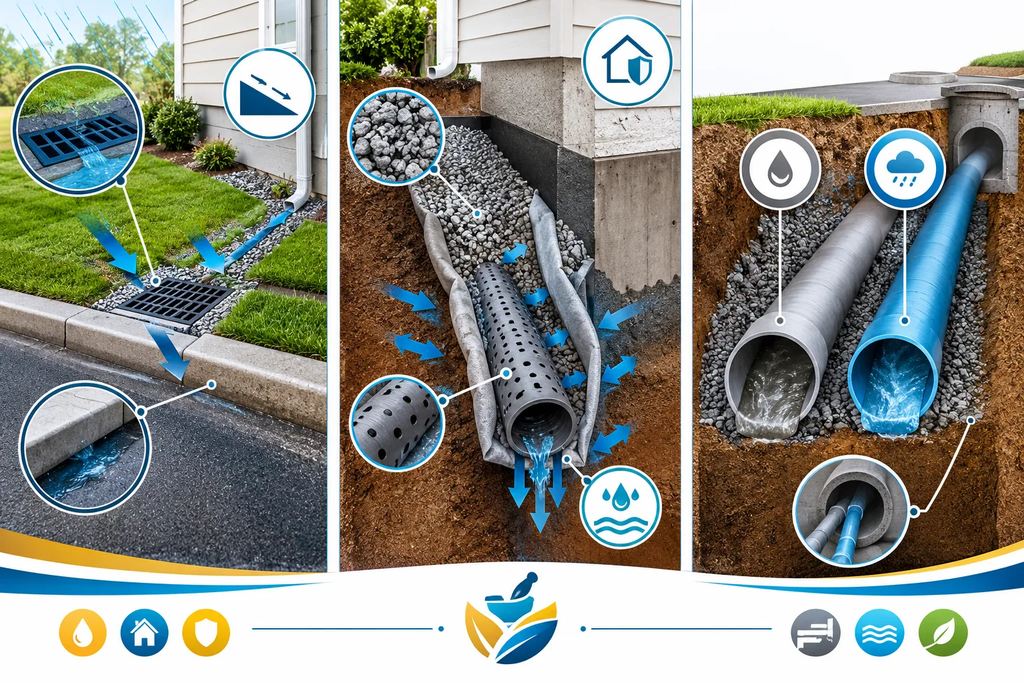
Surface drainage systems are designed to collect and divert water that accumulates directly on ground surfaces, yards, or pavements during moderate rainfall. They function through gutters, open ditches, and calculated slopes that guide water to a safe discharge point, preventing puddling and soil erosion. They serve as the first line of defense against surface moisture and are typically the most cost-effective and quickest solution to install on residential properties.
Type 2: Subsurface or Deep Drainage Systems (French Drains and Perforated Pipes)
When the issue lies beneath the surface rather than above, subsurface drainage systems step in, such as the classic French drain: a perforated pipe surrounded by gravel and geotextile fabric that absorbs excess subsoil moisture. This system protects foundations by reducing the hydrostatic pressure that trapped water exerts against retaining walls and structural bases. It is essential in areas with a high water table or poorly permeable clay soils.
Type 3: Sanitary and Storm Drainage Systems (Structural Piping Systems)
The third type comprises sanitary drainage and storm drainage networks, responsible for carrying sewage and rainwater to public sewer mains or septic tanks, depending on the setup. Current building codes and technical standards recommend keeping these two networks separate to prevent hydraulic overload and facilitate differentiated treatment; systems where both wastewater and rainwater mix are known as combined drainage systems and, although they still exist in older infrastructure, are now considered obsolete for new construction projects.
Key Factors for Selecting and Installing the Right Drainage System
Choosing among the three types of drainage systems is not an aesthetic decision, but a technical calculation based on several terrain and property usage variables. Overlooking any of these factors is the most common cause of premature failures in newly installed systems.
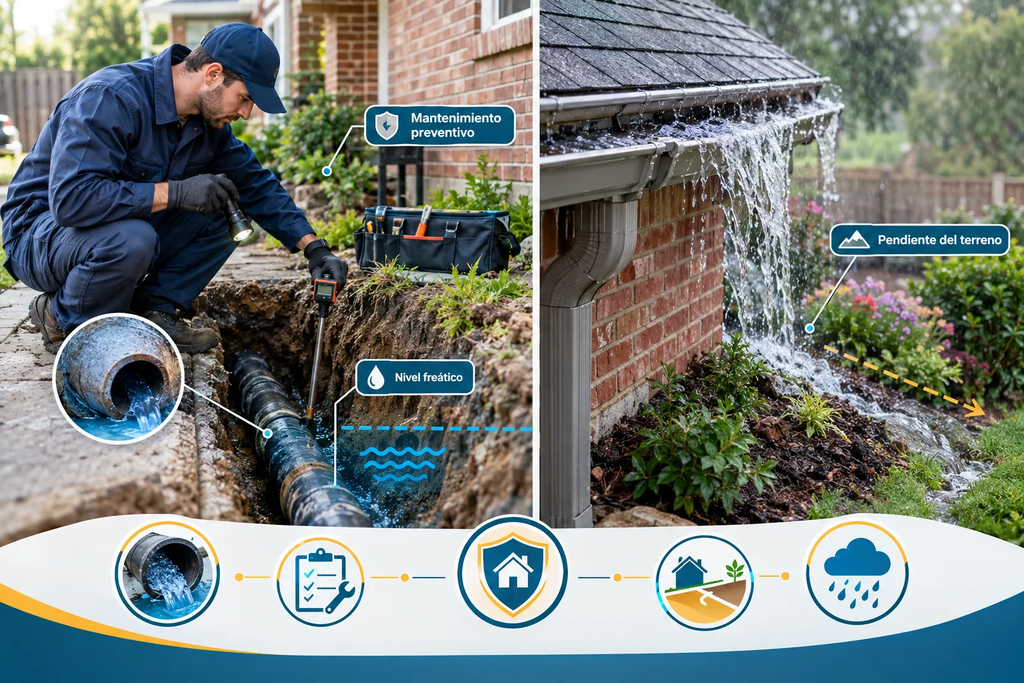
- Soil permeability: Clay soil holds water and promotes underground accumulation, making a French drain essential; sandy soil, by contrast, may only require surface drainage.
- Local precipitation volume: Regions with frequent, heavy rainfall require storm drainage systems sized for extraordinary peaks, not just ordinary weather events.
- Ground slope: Insufficient or poorly oriented grading negates the effectiveness of any gutter or ditch, regardless of its size.
- Preventive maintenance: Leaves, sediment, and roots clog pipes and grates over time; routine cleaning prevents a well-designed system from failing due to neglect.
The following table summarizes these factors on a comparative basis:
| Key Factor | Surface Drainage | Subsurface Drainage | Sanitary/Storm Drainage |
| Issue Resolved | Visible surface water | Underground moisture | Sewage and rainwater |
| Installation Cost | Low | Medium-High | High |
| Maintenance Needs | Frequent (grates) | Occasional (sediment) | Regular (network inspection) |
| Risk of Failure | Puddles, erosion | Structural damage | Flooding and contamination |
“A well-designed drainage system is invisible in its daily operation and is only noticed when it fails.”
A common scenario in Queens properties and other areas of New York with basements is combining a perimeter French drain alongside surface gutters; when one of the two components becomes saturated due to lack of maintenance, water finds the path of least resistance and eventually seeps into the home’s interior. This is why engineers recommend evaluating all three types of drainage systems collectively rather than in isolation.
Conclusion
Understanding what the 3 types of drainage systems are—surface, subsurface, and sanitary/storm—allows you to anticipate failures before heavy rain turns them into a costly emergency. Selecting the correct system, paired with consistent maintenance, prevents flooding, structural damage, and underground repairs that are often far more expensive than initial installation. If you suspect your property has an inadequate or improperly installed drainage system, requesting a professional pipe inspection with a specialized plumbing service before the next rainy season is highly recommended.
Informational Note: This content is for general informational purposes regarding drainage systems and does not replace evaluation by a civil engineer, licensed plumber, or qualified healthcare professional. If you experience health symptoms related to dampness, mold, or water quality, always consult a medical professional or pharmacist.
Key Takeaways
- Surface drainage systems resolve visible runoff on lawns, patios, and pavements using gutters and proper grading.
- Subsurface drainage systems (French drains) protect foundations by relieving hydrostatic pressure from groundwater.
- Sanitary and storm drainage systems are separate piping networks that prevent sewage from mixing with rainwater.
- Combined drainage systems exist in older municipal infrastructure, but current building codes advise against them due to overflow risks.
- Proper system selection depends on soil type, ground slope, precipitation volume, and ongoing preventive maintenance.
Frequently Asked Questions
What is the structural difference between a storm drainage system and a combined drainage system in urban areas?
A storm drainage system uses dedicated piping exclusively for transporting rainwater to a discharge or infiltration point, whereas a combined drainage system uses a single pipe to convey both wastewater and rainwater simultaneously. Structurally, combined systems require larger pipe diameters to handle peak flow surges, which increases the risk of sewage overflows during severe storms.
How often does a subsurface drainage system require deep cleaning to prevent sediment clogging?
Generally, a thorough inspection and flushing are recommended every two to three years under normal conditions. However, in soils with heavy clay content or nearby tree roots, annual maintenance is advisable to prevent gravel and geotextile fabric from losing their filtration capacity.
What signs indicate that a surface drainage system has become insufficient due to landscape changes?
The clearest indicators include persistent standing water that fails to dissipate hours after rainfall, visible soil erosion around gutters, irregular ground settling near the foundation, and rising damp on lower walls, suggesting that the original grading no longer directs water properly toward the discharge point.