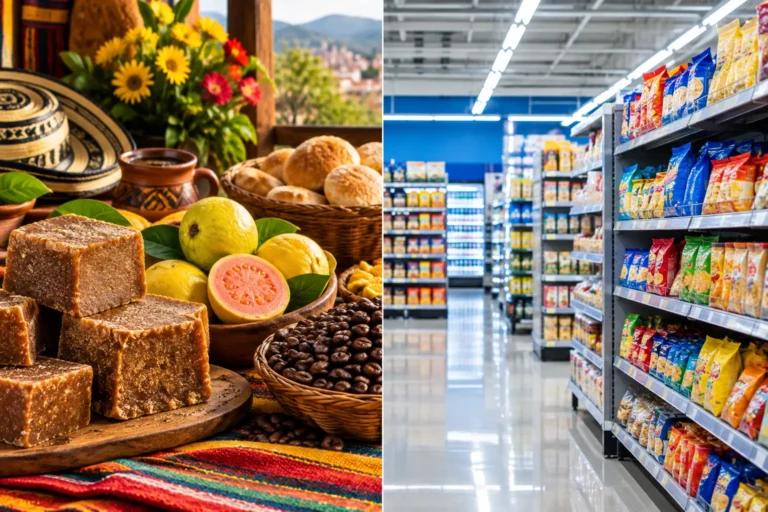
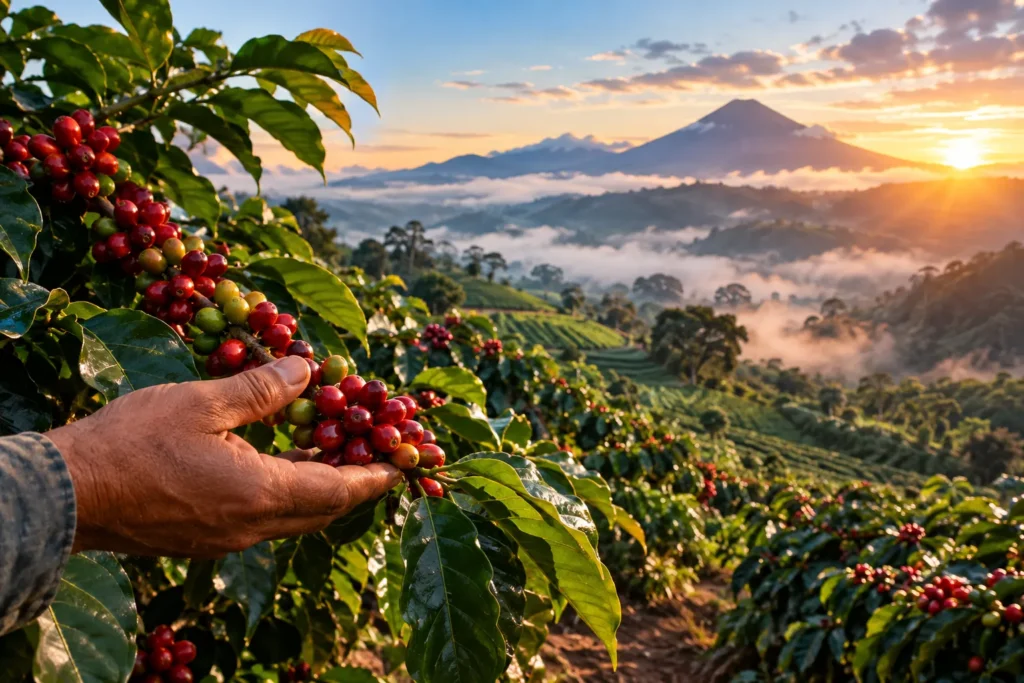
At 1,800 meters (5,900 feet) above sea level, the difference between a bright, fruity cup and a sweet, chocolaty one can depend on as little as 200 meters (650 feet) of elevation and a specific microclimate. That invisible variable is what separates a Colombian bean with bright acidity from a Brazilian bean with a dense body and nutty notes. Before answering which Latin American countries have the best coffee in the world, it is essential to understand how exact altitude rewrites the flavor profile of every single cup.
Quick Answer
In summary, Colombia stands out for its smoothness, balanced acidity, and floral and fruity aromas. Brazil excels with its dense body and nutty, chocolaty notes. Panama impresses with its exclusive Geisha varietal featuring jasmine aromas, while Guatemala contributes volcanic complexity. Honduras and Costa Rica complete the podium thanks to their ultra-high technical consistency in every batch.
Which Latin American Countries Have the Best Coffee in the World? Cupping and Selection Guide
Latin America concentrates the most diverse sensory profiles in the coffee world, from Colombian citrus acidity to Brazilian chocolaty sweetness. This variety addresses the exact goal of anyone seeking to identify which origin best fits their palate. Each region combines volcanic soil, altitude, and climate to craft unrepeatable flavor signatures.
To professionally evaluate which Latin American countries have the best coffee in the world, certified cuppers analyze four criteria: aroma, acidity, body, and residual sweetness. Below is a breakdown of each leading country following these specialty industry technical parameters.
Step 1: Colombia and the Excellence of Washed Mild Coffee
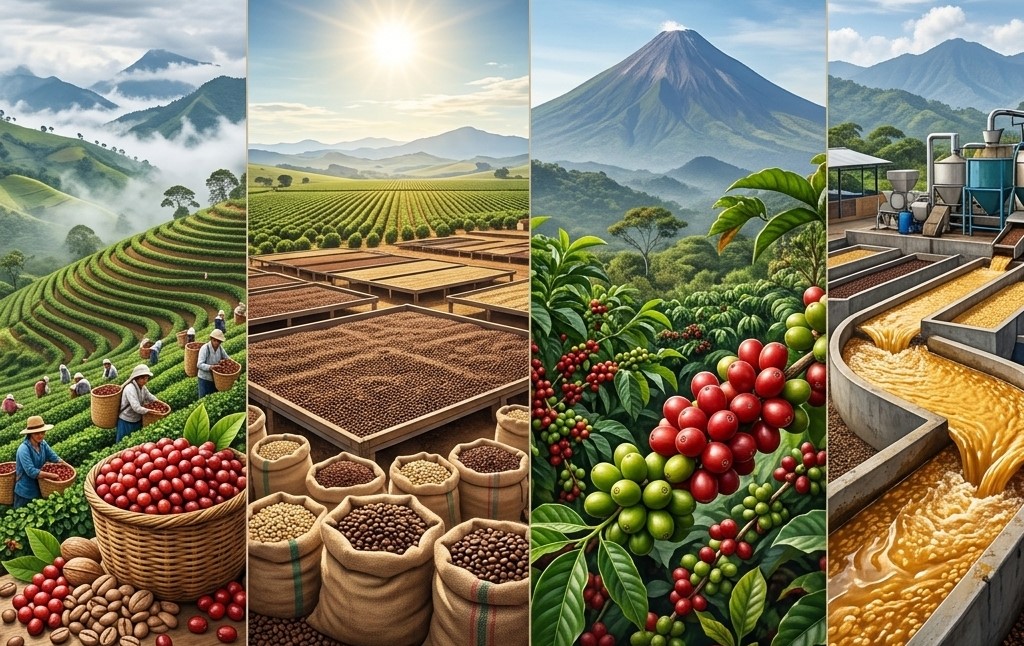
Manual selective harvesting on steep slopes above 1,500 meters (4,900 feet) allows pickers to gather only ripe coffee cherries—a process impossible to replicate with machinery. Designated origins protect regions such as Huila, Nariño, and the Coffee Axis (Eje Cafetero), where post-fermentation washing produces cups of bright acidity with notes of citrus, caramel, and flowers. This technical balance is the reason Colombian coffee serves as a global benchmark in specialty cupping.
Step 2: Brazil and Full-Bodied Chocolaty Profiles
Brazil dominates global volume thanks to expansive farms at moderate altitudes where the natural process predominates—that is, drying the whole fruit in the sun before pulping. This technique concentrates sugars and creates low-acidity profiles with notes of hazelnut, cacao, and a heavy body ideal for espresso blends. It is undoubtedly the “safe” origin preferred by roasters seeking large-scale consistency.
Step 3: Panama and Guatemala: Microclimates and the Exclusivity of the Geisha Varietal
In Antigua, Guatemala, volcanic soils and altitudes exceeding 1,700 meters (5,500 feet) create complex cups with winy acidity and smoky hints that compete in the Cup of Excellence. Panama, on its part, cultivates the Geisha varietal in Boquete—a coffee that reaches record prices at international auctions thanks to its floral fragrance of jasmine and bergamot. Both countries produce small volumes, but their lots are among the most elite on the planet.
Step 4: Costa Rica and Honduras: Innovation in Honey Processes and High-Altitude Washed Coffees
Costa Rica has become synonymous with innovation thanks to the Honey process, an intermediate fermentation between washed and natural that imparts honey-like sweetness and smooth acidity. Honduras, with its growing prominence in international awards, has perfected wet processing in high-end microlots that now achieve specialty prices comparable to those from Panama. Both countries share a technical commitment to sustainability and bean traceability.
Professional Criteria for Choosing the Best Origin Based on Your Brewing Method
Choosing among these origins depends not only on the country, but on how the cup will be prepared at home. The perception of the “best coffee” changes radically depending on the extraction method used, which is why professional baristas adjust their selection to the brewing method before deciding on the origin.
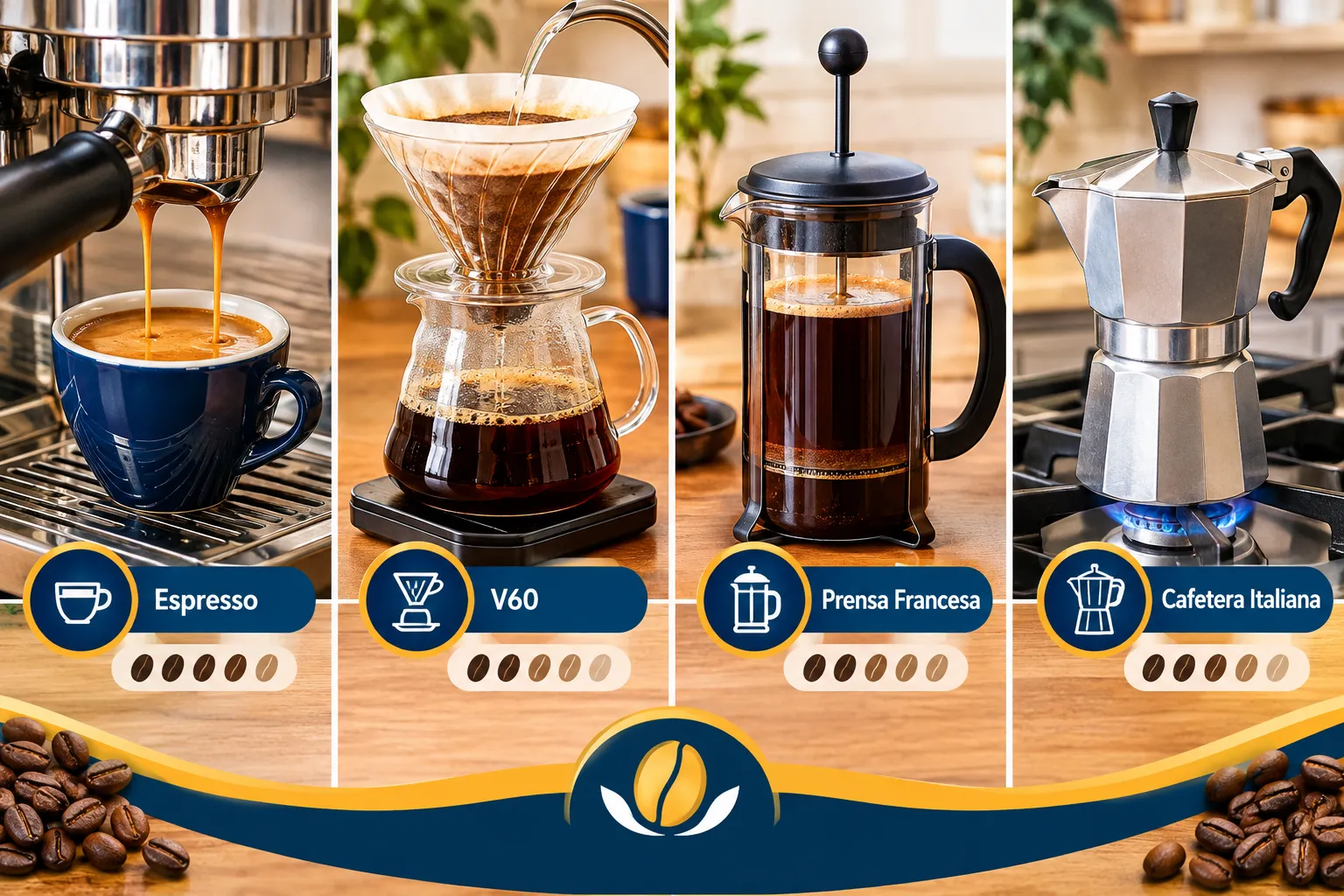
The following table summarizes the combinations most recommended by cupping experts:
| Brewing Method | Recommended Origin | Ideal Roast Level |
| Espresso | Brazil or Guatemala | Medium to Dark |
| V60 (pour-over) | Colombia or Costa Rica | Light to Medium |
| French Press | Honduras or Nicaragua | Medium |
| Moka Pot (Stovetop) | Brazil or Peru | Medium to Dark |
For fast extractions like espresso, medium-to-dark roasts highlight body and reduce perceived acidity, favoring Brazil and Guatemala. In contrast, slow manual pour-over methods like the V60 require light roasts that preserve natural acidity, which is why Colombian and Costa Rican coffees shine in this technique. The French press, extracting oils and sediments, adapts well to balanced profiles like those from Honduras, while the traditional Moka pot pairs perfectly with Brazilian or Peruvian robustness.
Those looking to refresh their morning routine with imported goods and complementary personal care can explore the Latin products store at Colombia Pharmacy, where household care items tailored for the Queens Latino community can also be found.
Conclusion
Determining which Latin American countries have the best coffee in the world ultimately depends on individual palate preferences. However, Colombian coffee continues to set the global standard for smoothness, balance, and traceability, while Brazil, Panama, Guatemala, Costa Rica, and Honduras contribute equally valuable nuances depending on the chosen brewing method. The region will continue to dominate the specialty coffee market in 2026 and 2027 thanks to its microclimate diversity and commitment to quality.
Medical Disclaimer: Caffeine consumption may interact with certain medications or health conditions such as hypertension, anxiety, or heart conditions. This article is for informational purposes only and does not substitute for a professional consultation. Before increasing your coffee intake, speak with a qualified doctor or pharmacist. At Colombia Pharmacy, our team is available to guide you on interactions between supplements, medications, and daily dietary habits; learn about our pharmacy and vaccination services for more information.
Key Takeaways
- Colombia produces mild washed coffees with balanced acidity, citrus, and floral notes thanks to selective high-altitude hand-harvesting.
- Brazil leads global volume with chocolaty profiles, low acidity, and heavy body, making it ideal for espresso.
- Panama and Guatemala offer the world’s most exclusive lots, including the legendary Geisha varietal with jasmine notes.
- Costa Rica and Honduras stand out for innovative Honey processes and outstanding technical consistency in wet milling.
- Peru and Nicaragua are quiet yet key suppliers in the high-quality specialty coffee supply chain.
- The “best” cup always depends on the brewing method and the personal flavor profile preferences of each consumer.
Frequently Asked Questions
What SCA (Specialty Coffee Association) score determines whether a coffee is considered specialty grade?
The SCA uses a 100-point scale evaluated by certified cuppers (Q Graders). A coffee must score 80 points or higher to be officially classified as “specialty coffee,” taking into account aroma, flavor, acidity, body, and the absence of physical defects in the green bean.
How does the roast level affect the loss of origin acidity?
As roasting progresses from light to dark, the bean’s natural chlorogenic acids progressively degrade due to heat. This reduces perceived acidity and generates bitter compounds and roasted notes, which is why light roast coffees better preserve the original characteristics of the farm.
Why does Colombian hand-harvested coffee commercially outperform mechanized harvesting?
Hand-harvesting allows pickers to select only cherries at their peak point of ripeness, avoiding green or overripe fruits that compromise the final flavor. Mechanized harvesting, common on flat terrains like those in Brazil, cannot differentiate ripeness levels, reducing the sensory consistency of the final lot.