An improperly applied ointment can feel sticky, useless, or outright counterproductive for anyone seeking real skin relief. Many people confuse this pharmaceutical form with a cream or a gel, unaware that its oily structure holds a little-known secret. That lipid barrier is capable of retaining up to 80% more skin moisture than any other topical presentation available in a pharmacy.
Comprehending what an ointment is isn’t just a technical detail for pharmacists: it is practical information that helps you choose the right product for dry, cracked, or inflamed skin. At Colombia Pharmacy in Jackson Heights, this question arises daily among patients seeking relief for common dermatological conditions amidst New York’s changing weather.
Quick Answer
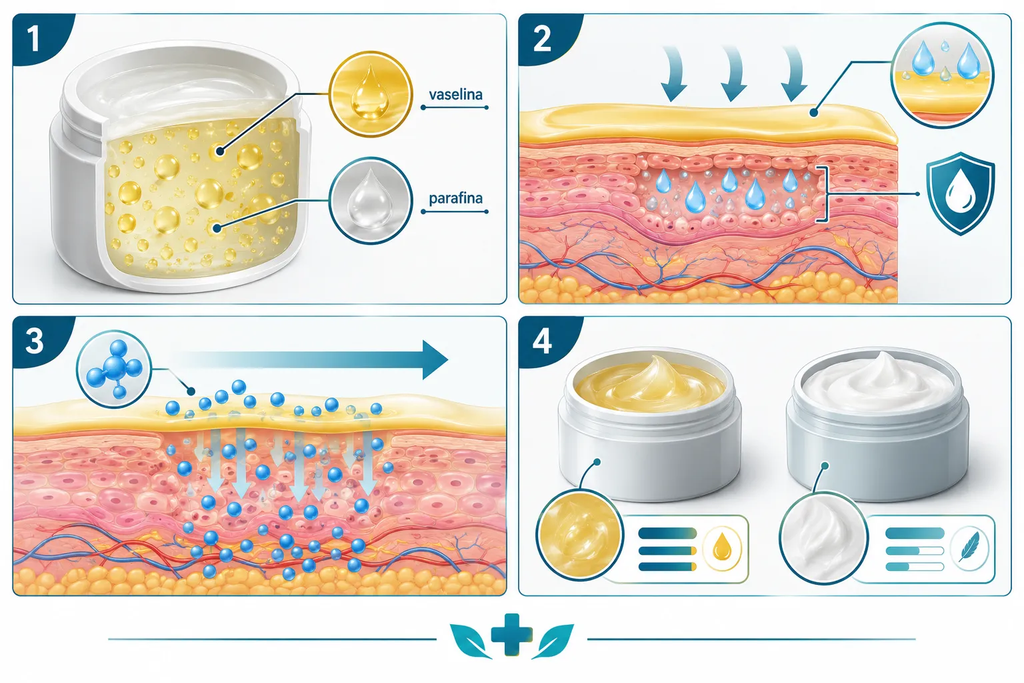
An ointment is a semi-solid, greasy, oily topical pharmaceutical preparation composed primarily of petrolatum, paraffin, or mineral oils. Its function is to act as a protective barrier on the skin, soften dry or thickened tissue, and facilitate the deep absorption of active ingredients without evaporating quickly—unlike creams or gels that contain water in their formula.
What is an Ointment? 5 Key Characteristics and Uses in Dermatological Health
From a physicochemical standpoint, an ointment is a semi-solid mixture that is almost completely anhydrous (meaning it contains no water in its base composition). This continuous lipid structure allows it to adhere firmly to the skin for hours. Medical organizations and specialized dictionaries agree that this dosage form belongs to the category of topical preparations for external use with specific therapeutic goals.
Below are the five defining characteristics of this pharmaceutical form that explain why healthcare professionals recommend it for certain skin conditions. Each characteristic directly influences how to properly choose and apply an ointment, preventing common mistakes when treating skin lesions at home.
1. Highly Oily and Water-Free (Anhydrous) Base Composition
The formula of an ointment is built on a lipid matrix made of petrolatum, lanolin, or paraffin—ingredients that require no water to maintain their stability. This absence of a water phase reduces the need for harsh preservatives, as the greasy environment hinders the growth of microorganisms. For this reason, many ointments enjoy a longer shelf life than traditional creams once opened.
2. Occlusive Properties for Intense Moisture Retention
The most valued property of an ointment is its occlusive effect: it forms a protective film over the skin that prevents the body’s natural water evaporation. This barrier proves especially useful for extremely dry, cracked, or severely flaking skin, such as during winter weather in cities like New York. Thanks to this property, the skin regains flexibility and reduces tightness much faster than with other topical products.
3. Slow Absorption and Prolonged Action of Active Ingredients
Due to its density, an ointment releases its active ingredients gradually and continuously into the affected area. This characteristic is critical in treatments involving topical antibiotics, corticosteroids, or healing agents, as it maintains the therapeutic effect for longer periods without requiring frequent reapplication. This controlled release also lowers the risk of irritation caused by excessive application.
4. Ideal Application on Dry, Scaly, or Hyperkeratotic Lesions
Ointments are specifically indicated for conditions where the skin exhibits visible thickening or scaling, such as psoriasis, chronic eczema, or minor healing burns. Their dense texture helps soften hardened skin layers, facilitating the penetration of specific treatments. Doctors and dermatologists generally prefer them over creams when the skin requires deep, long-lasting hydration.
5. Technical Difference Compared to Creams, Salves, and Gels
The primary distinction between an ointment and other topical forms lies in the ratio of oil to water. While an ointment is virtually anhydrous, creams contain a balanced emulsion of water and oil, and gels are predominantly water-based with gelling polymers. Salves (or pomades) typically feature an intermediate base—less oily than an ointment but thicker than a cream—which often causes confusion among patients.
Application Recommendations and Precautions for Safe Ointment Use
Before applying any ointment, it is essential to clean the affected area with warm water and a mild soap, removing dirt or previous medication residue. The skin should remain slightly damp, as this aids initial absorption before the occlusive layer seals the surface. Applying ointment over dirty skin can trap bacteria beneath the greasy film, potentially leading to complications.
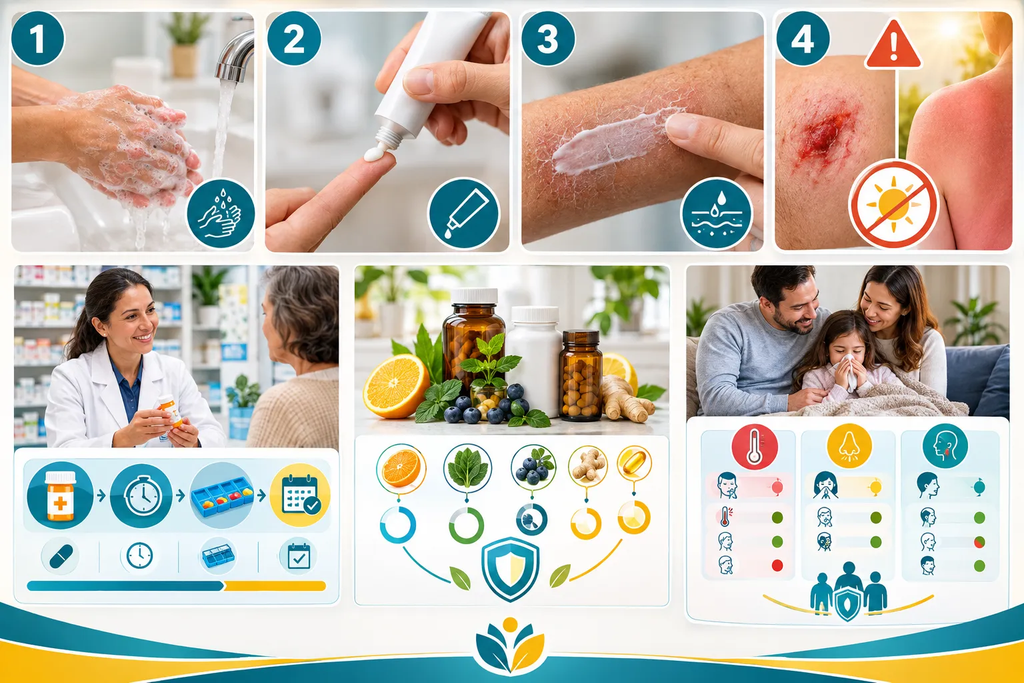
The recommended amount is usually minimal: a thin layer is sufficient to cover the lesion without creating unnecessary greasy buildup. Applying too much product does not speed up recovery; on the contrary, it can impair skin breathability and feel uncomfortable. In most cases, one or two daily applications are enough, unless otherwise directed by a doctor.
There are situations where ointments are not recommended. For instance, open wounds with active exudate require dressings that absorb moisture rather than products that lock it in. Similarly, acute acne with active inflammation can worsen if covered with an occlusive layer that traps extra sebum and bacteria.
Understanding what an ointment is empowers you to make informed decisions when treating common skin conditions, from dry skin to lesions requiring prolonged care. Its oily, occlusive structure makes it a valuable ally for damaged skin when used correctly and in the proper context. Before starting any topical treatment, consulting a pharmacist or medical specialist remains the most responsible choice.
Those interested in exploring specialized dermatological care options can browse the selection at the latin products, personal care, and home store at Colombia Pharmacy. Furthermore, learning more about their pharmacy and vaccination services can help you manage your family’s overall skin and healthcare needs in Queens.
Medical Disclaimer: This article is for informational and educational purposes only and does not substitute for a consultation with a qualified doctor or pharmacist. Always consult a healthcare professional regarding any skin condition before beginning a topical treatment.
Key Takeaways
- An ointment is a semi-solid, oily, and virtually water-free pharmaceutical dosage form.
- Its occlusive effect retains skin moisture significantly better than creams or gels.
- It releases active ingredients slowly and continuously, making it ideal for topical antibiotics or corticosteroids.
- It is especially effective for dry, scaly, or thickened skin, such as in psoriasis or chronic eczema.
- It differs from creams and salves due to its higher oil-to-water ratio.
- It should not be applied to open exudative wounds or acute inflammatory acne.
Frequently Asked Questions
What is the exact difference between a salve (pomade) and an ointment in pharmaceutical practice?
Although used synonymously in everyday language, in pharmacy, a salve (or pomade) has a semi-solid base with a lower oil content than an ointment, giving it a lighter texture that is easier to spread. An ointment, by contrast, maintains an almost entirely oily base, making it denser and more occlusive.
Why shouldn’t oily ointments be applied to fresh or recent sunburns?
Recent sunburns involve active inflammation and trapped heat in the skin. Applying an occlusive oily layer can trap that heat and hinder its natural release, delaying recovery. In these cases, lightweight gels or lotions are preferred until initial inflammation subsides.
How long does an opened ointment last before losing effectiveness or expiring?
Generally, an opened ointment retains its effectiveness for six to twelve months, depending on its formulation and active ingredients. However, you should always check the expiration date on the packaging and avoid use if you notice changes in color, odor, or texture.