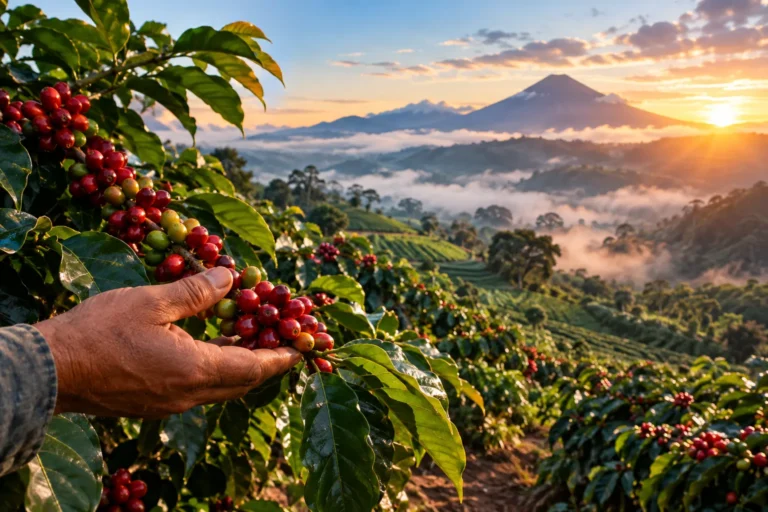
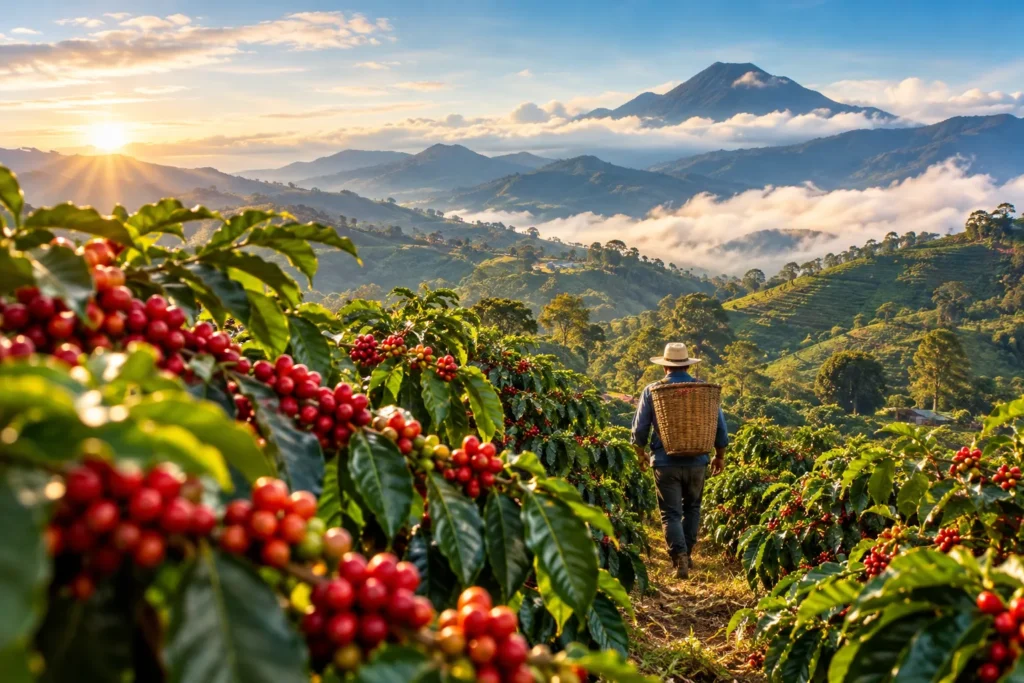
Between 1,200 and 2,000 meters of altitude, something invisible happens inside every green bean that will grow to become one of the most appreciated cups on the planet. That something has a name: Andean microclimate, volcanic soils, and a geographical strip so precise that it legally defines what is—and what is not—Colombian coffee. What follows unravels exactly where this natural alchemy occurs and why it can never be replicated quite the same anywhere else in the world.
Quick Answer
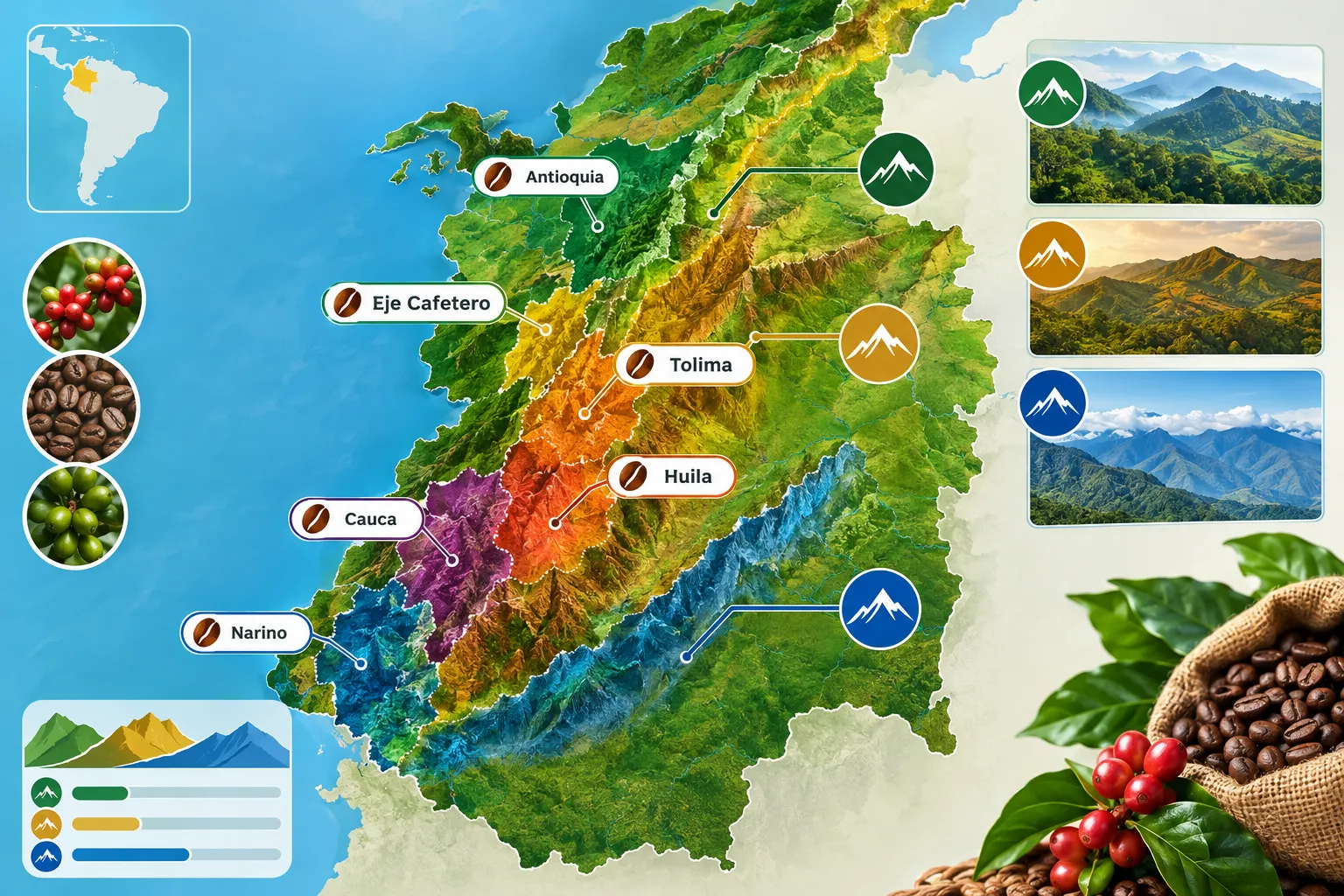
Coffee cultivation in Colombia is concentrated mainly in the Andean region, along the Central, Western, and Eastern mountain ranges. The most emblematic departments include the Coffee Triangle (Caldas, Risaralda, and Quindío), in addition to Antioquia, Huila, Tolima, Cauca, and Nariño. In these areas, volcanic soil, the natural shade of trees, and adequate altitude guarantee 100% Arabica beans, globally recognized for their quality.
Where Is Coffee Grown in Colombia?: Producing Regions and Coffee Geography
Colombia possesses a privileged territory that combines three mountain ranges, tropical climates, and a position close to the Equator. This geography allows coffee to be produced year-round, concentrated in hillside farms located in mountainous areas. It is no coincidence that the country is a global synonym for washed Arabica coffee of the highest quality.
Below are the main coffee-growing zones and departments that make up the so-called Colombian Coffee Zone. Each region brings distinct nuances of flavor, aroma, and body, depending on its specific altitude and soil conditions. Understanding these differences helps explain why every Colombian cup tells a unique geographical story.
The Historical Coffee Triangle and High Denomination of Origin Departments
The symbolic heart of national coffee growing is the so-called coffee triangle, formed by Caldas, Risaralda, and Quindío. This area combines landscapes declared a UNESCO World Heritage Site with family farms that have cultivated coffee for generations, producing balanced, sweet, and medium-acidity cups recognized internationally.
Antioquia, on the other hand, is a coffee powerhouse that combines tradition and production scale. Its municipalities in southwestern Antioquia contribute significant volumes to the national harvest, with cup profiles that stand out for their medium body and chocolaty notes.
Further south, Huila and Tolima have positioned themselves as undisputed leaders in the specialty coffee category. Thanks to their high altitude and variety of microclimates, they produce high-acidity cups, fruity notes, and complex profiles that have won awards in international cupping contests.
Finally, in the extreme south of the country, Cauca and Nariño stand out for their volcanic soils and extreme altitudes, some exceeding 2,000 meters. These conditions generate dense coffees, with bright acidity and pronounced sweetness, highly valued by specialized roasters worldwide.
For those looking to bring these single-origin flavors home to New York, the Latin products store at Colombia Pharmacy offers a curated selection that connects the community with its gastronomic roots.
Geographical and Climatic Factors That Make Colombian Coffee Unique
The exceptional quality of Colombian coffee is not accidental; it responds to a precise combination of natural factors. The first is altitude, which in the most prominent farms ranges between 1,200 and 2,000 meters above sea level. At higher altitudes, beans mature more slowly, concentrating sugars and acids that translate into more complex and aromatic cups.
The second decisive factor is Colombia’s proximity to the equatorial line. This geographical position allows the country to have, unlike other global producers, two harvest seasons per year: the main harvest and the so-called traviesa or mitaca. This guarantees a more constant supply of fresh coffee throughout the calendar.
“Altitude and proximity to the equator not only define when Colombian coffee is harvested, but also the intensity of its characteristic flavors.”
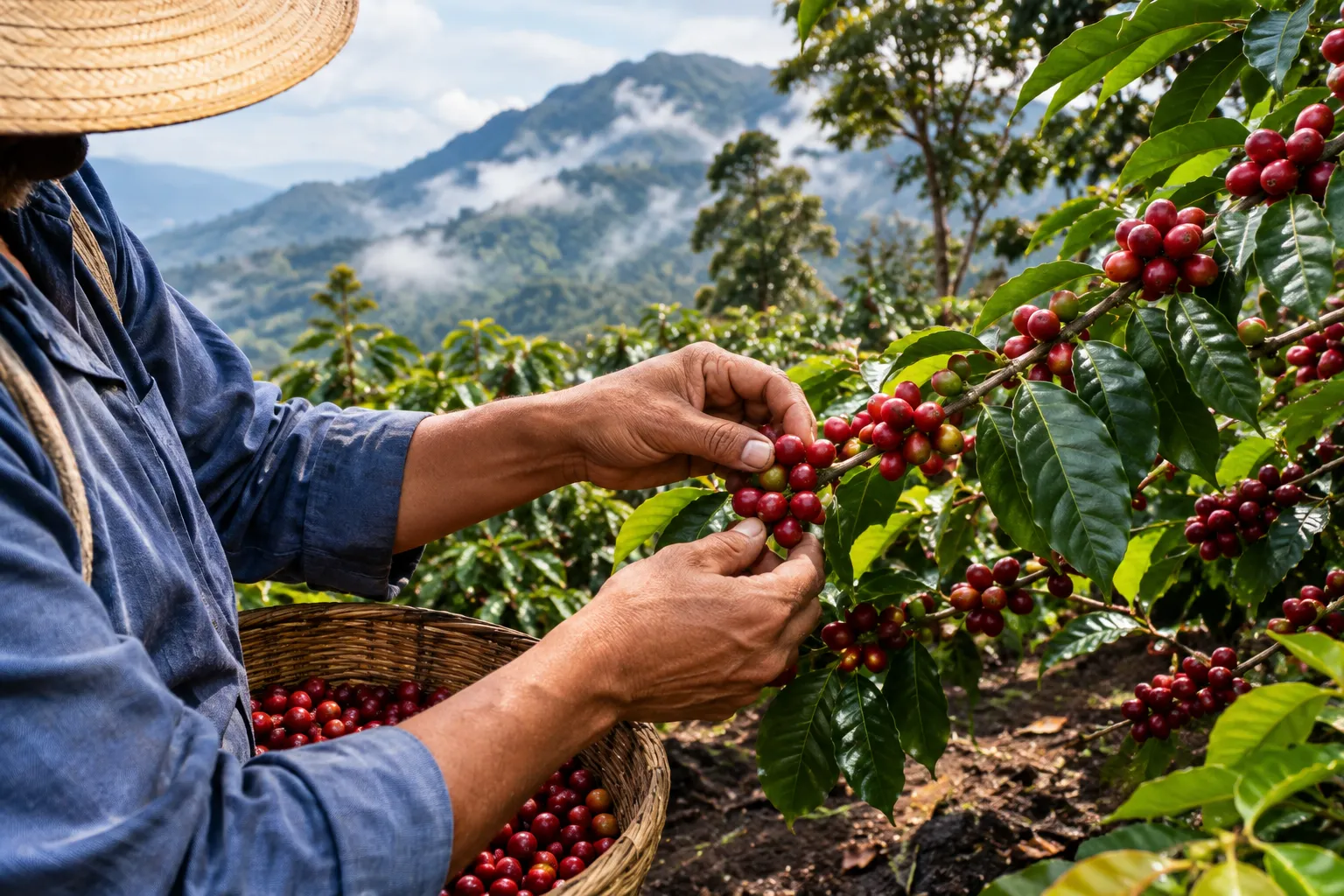
The third element, deeply cultural, is manual bean-by-bean harvesting. Unlike mechanized harvests used in other countries, in Colombia coffee growers select only ripe cherries, a practice that requires intensive labor but ensures consistency and superior quality in every exported lot.
| Key Factor | Range or Characteristic | Effect on the Cup |
| Altitude | 1,200 to 2,000 masl | Higher acidity and complexity |
| Location | Near the Equator | Two annual harvests |
| Soil | Volcanic | Sweetness and body |
| Harvesting | Manual, bean-by-bean | Quality consistency |
Despite this rigor, the sector faces challenges: in the recent coffee year, national production fell by 15% compared to the previous period, although September showed a 6% recovery in harvested volume. The renovation of more than 80,000 hectares of coffee plantations seeks to reverse this trend and maintain the competitiveness of the Colombian bean against other global origins.
Conclusion
Every cup of Colombian coffee encapsulates the silent effort of thousands of coffee-growing families working on the Andean slopes, harvesting bean by bean under unique climatic conditions. Understanding where coffee is grown in Colombia is also understanding why this product has become a symbol of national identity and export pride. The combination of altitude, volcanic soil, and manual tradition has no exact replica in any other corner of the world.
Medical Notice: This article is for informational and cultural purposes only and does not constitute medical advice. If you have questions about interactions between caffeine and any medication, always consult a qualified pharmacist or healthcare professional before making changes to your diet or routine.
Key Takeaways
- Colombian coffee is mainly cultivated in the Andean mountain ranges: Central, Western, and Eastern.
- The Coffee Triangle (Caldas, Risaralda, Quindío), Antioquia, Huila, Tolima, Cauca, and Nariño are the most prominent producing regions.
- The ideal altitude ranges between 1,200 and 2,000 meters above sea level.
- Colombia has two annual harvests thanks to its proximity to the Equator.
- Only Arabica coffee is cultivated, harvested manually bean by bean to guarantee quality.
Frequently Asked Questions
What is the difference in flavor between coffee grown in the mountains of southern Colombia (Nariño/Huila) versus the traditional Coffee Triangle?
Southern coffees, such as those from Nariño and Huila, tend to have a brighter acidity and fruity or citrus notes due to their extreme altitudes and young volcanic soils. In contrast, coffees from the traditional Coffee Triangle tend to be more balanced, with medium sweetness and chocolaty or caramel notes, the result of moderate altitudes and more stable climatic conditions.
Why is it prohibited by law in Colombia to cultivate Robusta coffee and only Arabica is permitted?
Colombian regulations restrict cultivation to the Arabica variety because this species adapts better to the altitudes and climates of the Andean zones, producing cups of higher quality and aromatic complexity. Furthermore, this restriction protects the international reputation of Colombian coffee, associated exclusively with smooth and fine profiles of washed Arabica, avoiding blends that could dilute its origin identity.
How does the processing method (washed, honey, or natural) influence the final profile of the Colombian coffee cup?
The washed process, prevalent in Colombia, removes the mucilage before drying, generating clean cups with defined acidity. The honey process preserves part of the mucilage, providing greater sweetness and body. The natural process, where the whole cherry is dried, produces more intense and fruity notes, although it is less common in the country due to the humidity conditions of traditional coffee-growing areas.