

A 45-year-old man who arrives home exhausted at 3 in the afternoon, who has lost strength in the gym without explanation, and whose libido is no longer the same, often seeks quick answers in colorful bottles. There is a specific micronutrient that, when combined with a precise botanical extract, can multiply the effect on free testosterone without disrupting the delicate balance of the hormonal axis. Before revealing that combination, it is necessary to understand what actually works among natural testosterone supplements and what is simple marketing.
Quick Answer
The compounds with the strongest scientific backing to support testosterone naturally are zinc, vitamin D3, magnesium, Ashwagandha extract, Fenugreek, and Tongkat Ali. However, their effectiveness depends on correcting real deficiencies, choosing appropriate dosages, synchronizing their use with strength training, and ensuring restful sleep of seven to eight hours per night.
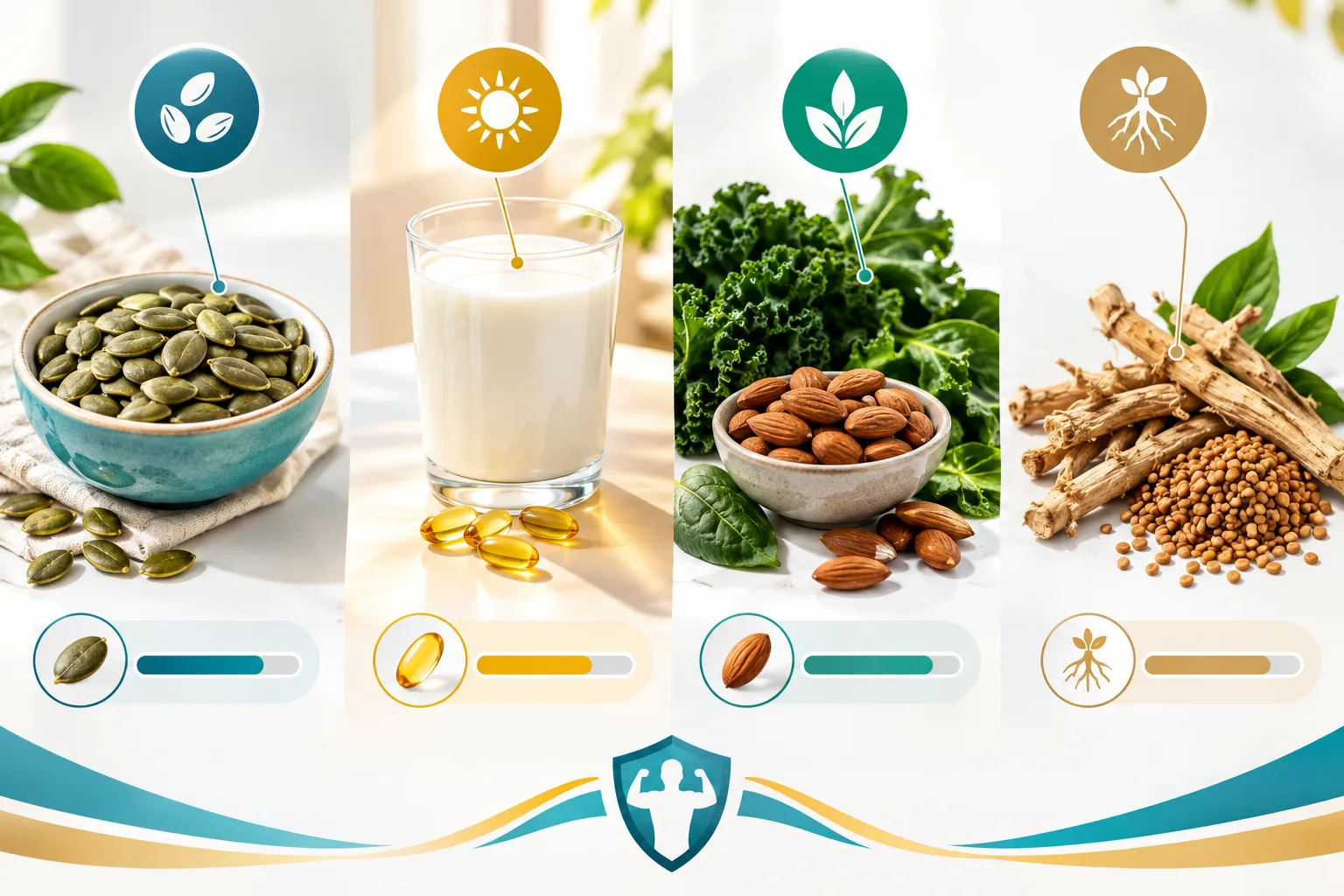
Natural Testosterone Supplements: A Step-by-Step Professional Guide
Testosterone regulates much more than sexual desire: it directly influences muscle mass, bone density, mood, and daily energy levels. When its levels fall below the optimal range, symptoms such as persistent fatigue, loss of strength, and decreased libido appear, affecting quality of life.
Building a safe supplementation protocol is not about buying the most expensive formula on the market, but about following a logical order based on evidence. Below are four practical steps to approach supplementation responsibly and with realistic expectations.
Step 1: Correct baseline micronutrient deficiencies (Vitamin D3, Zinc, and Magnesium)
The ZMA complex (zinc, magnesium, and vitamin B6) has gained popularity because these three minerals directly participate in the function of Leydig cells, which synthesize testosterone in the testes. Vitamin D3, in particular, acts as a steroid hormone that, in men with confirmed deficiency, showed increases of up to 20% in free testosterone after one year of consistent use. Before supplementing, it is advisable to request a blood test to confirm low levels of these nutrients, as their effect is minimal in individuals without a true deficiency.
Step 2: Incorporate botanical adaptogens with clinical evidence (Ashwagandha and Tongkat Ali)
Adaptogens such as Ashwagandha and Tongkat Ali (Eurycoma longifolia) work by reducing cortisol, the stress hormone that directly competes with testosterone production in the body. By reducing chronic cortisol, especially in men with high workplace or physical stress, a more favorable hormonal environment is created for free testosterone to circulate unobstructed. Recent studies identify Ashwagandha as one of the “most promising” ingredients alongside Tongkat Ali, although results vary depending on the dosage and quality of the extract used.
Step 3: Optimize dosage, quality, and standardization of plant extracts
Not all supplements are created equal: the difference between an effective product and a useless one often lies in standardization. Looking for extracts with defined percentages of withanolides (in the case of Ashwagandha) or active saponins ensures that each capsule contains a consistent dose of the compound studied in clinical trials. It is preferable to choose brands with independent purity seals, as cases of products adulterated with undeclared ingredients that increase the risk of liver damage have been documented.
Step 4: Synchronize supplementation with strength training and sleep hygiene
Progressive resistance strength training naturally stimulates the release of testosterone and growth hormone, an effect that no supplement can replicate on its own. Getting seven to eight hours of deep sleep each night is equally crucial, as most nocturnal hormone production occurs during deep sleep stages. Combining both habits with proper supplementation creates a synergistic effect that maximizes medium-term results.
For those looking to start this protocol with reliable products, high-quality vitamins and supplements can be found at the Latino products and vitamins store at Colombia Pharmacy, where the team can provide guidance on appropriate options based on individual needs.
Myths, Precautions, and When to Consult an Endocrinologist
Today’s market is saturated with “complex” formulas combining maca, tongkat ali, fenugreek, and banaba, promising comprehensive hormonal support. The reality is that most of these products were never tested as a complete formula in clinical trials; their claims are based on isolated studies of individual ingredients with dosages different from those marketed, making it difficult to guarantee similar results.

“Testosterone boosters sit in a regulatory gray area: they do not undergo exhaustive safety testing, and long-term studies remain scarce.”
Fenugreek, although backed by some evidence, is one of the ingredients that causes the most adverse effects: heartburn, bloating, abdominal pain, and diarrhea are common. Additionally, it can potentiate diabetes medications, raising the risk of hypoglycemia, and alter the effects of blood thinners and certain antidepressants. Products that elevate testosterone can also worsen sleep apnea, stimulate prostate tissue growth, and increase red blood cell production, which thickens the blood and raises the risk of blood clots.
For these reasons, supplements are contraindicated or pose high risks in men with a history of heart attack, stroke, thrombosis, heart failure, or known or suspected prostate cancer. Below, a table summarizes when supplementation is reasonable and when a formal medical evaluation is required.
| Sign or Context | Recommended Action |
| Mild fatigue, no other symptoms | Evaluate diet, sleep, and exercise first |
| Confirmed zinc, D3, or magnesium deficiency | Targeted supplementation under medical control |
| Persistent erectile dysfunction | Medical consultation and complete hormonal panel |
| Cardiovascular or prostate history | Avoid self-medication; requires specialized evaluation |
| Use of blood thinners or diabetes medications | Consult interactions before using fenugreek or other extracts |
Severe symptoms such as persistent erectile dysfunction, marked depression, or incapacitating fatigue should not be treated with over-the-counter supplements without first confirming hormone levels through repeated blood tests. Testosterone replacement therapy, when medically indicated, requires careful assessment of cardiovascular and prostate risks that no natural supplement can replace.
If you experience these symptoms, the most responsible step is to seek a professional consultation. At Colombia Pharmacy, the team can guide you on the pharmacy and health services available in Queens, as well as help you with prescription transfers if you already have a treatment prescribed by your doctor.
Things to Keep in Mind
Natural testosterone supplements can offer real benefits, but only when used with good judgment: correcting proven deficiencies, choosing standardized extracts, and pairing the process with strength training, proper nutrition, and restful sleep. No bottle of capsules replaces a healthy lifestyle or a medical evaluation when symptoms are persistent or severe.
Medical Notice: This article is for informational purposes and does not substitute for diagnosis, advice, or treatment from a qualified healthcare professional. Always consult your doctor or pharmacist before starting any supplement, especially if you take other medications or have pre-existing medical conditions.
Key Takeaways
- Vitamin D3 (around 3,000 to 4,000 IU daily) can increase free testosterone by up to 20% in men with proven deficiency after one year of supplementation.
- Zinc and magnesium only yield clear hormonal benefits when a prior nutritional deficiency exists, not in men with normal levels.
- Ashwagandha reduces cortisol and chronic stress, which indirectly fosters a healthier hormonal environment.
- Fenugreek can cause gastrointestinal discomfort and interact with diabetes medications and blood thinners.
- Most commercial “testosterone boosters” with herbal blends lack their own clinical trials supporting their combinations.
- Strength training and deep sleep remain the safest and most effective strategies, with or without supplementation.
Frequently Asked Questions
How long does it take to notice an increase in energy levels after starting supplementation with Ashwagandha or Zinc?
Most studies report noticeable changes in energy and stress management between four and eight weeks of consistent use with Ashwagandha. In the case of zinc, when a real deficiency exists, effects on general well-being can be noticed within a similar timeframe, although measurable hormonal changes usually require blood tests to be accurately confirmed.
Is there any risk of gynecomastia or acne when consuming natural testosterone supplements?
The risk is low with the mentioned ingredients at standard doses, as they do not act as direct synthetic hormones. However, some poorly standardized or adulterated extracts have shown unexpected hormonal effects, so choosing certified, high-quality products significantly reduces this possibility.
How do alcohol consumption and refined sugars counteract the effects of these supplements?
Excess alcohol can reduce testosterone production by directly affecting testicular function and raising circulating estrogen. Refined sugars, on the other hand, generate insulin spikes that in the long term favor metabolic resistance—a factor associated with lower testosterone levels—which can partially neutralize the benefits of any natural supplement.